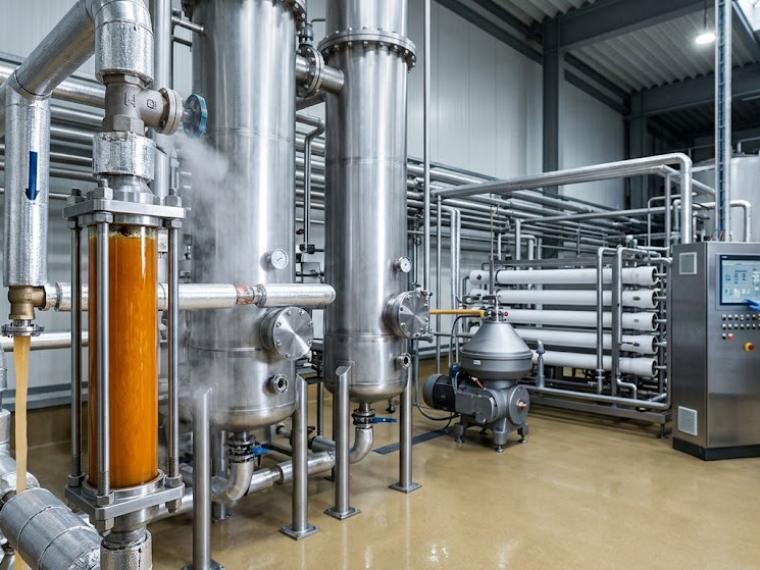
Tetra Pak juice packaging, utilizing aseptic technology and a six-layer structure, creates a completely impermeable barrier against light, oxygen, and microorganisms. This ensures long-term product stability without the need for any chemical preservatives. By combining ultra-high temperature (UHT) processing with sterile packaging conditions, this system allows juice to maintain its original quality for several months at ambient temperature.
The secret behind this extended shelf life lies in the complete isolation of the product from the external environment. Once all microorganisms are eliminated during processing and the packaging prevents any re-entry, there is no cause for spoilage. This innovation not only enhances consumer health by eliminating additives but also reduces logistics costs by removing the need for refrigeration.
How Does Aseptic Technology Eliminate the Need for Preservatives?
Aseptic technology refers to filling a sterilized product into a sterile package within a completely controlled environment. In this method, the juice never comes into contact with ambient air after pasteurization. Since air carries mold spores and bacteria, eliminating this contact effectively removes the primary source of contamination.
As a result, there is no need to add preservatives such as sodium benzoate or potassium sorbate, which are typically used to inhibit microbial growth in non-sterile products.
How Does the Six-Layer Structure Protect Nutrients?
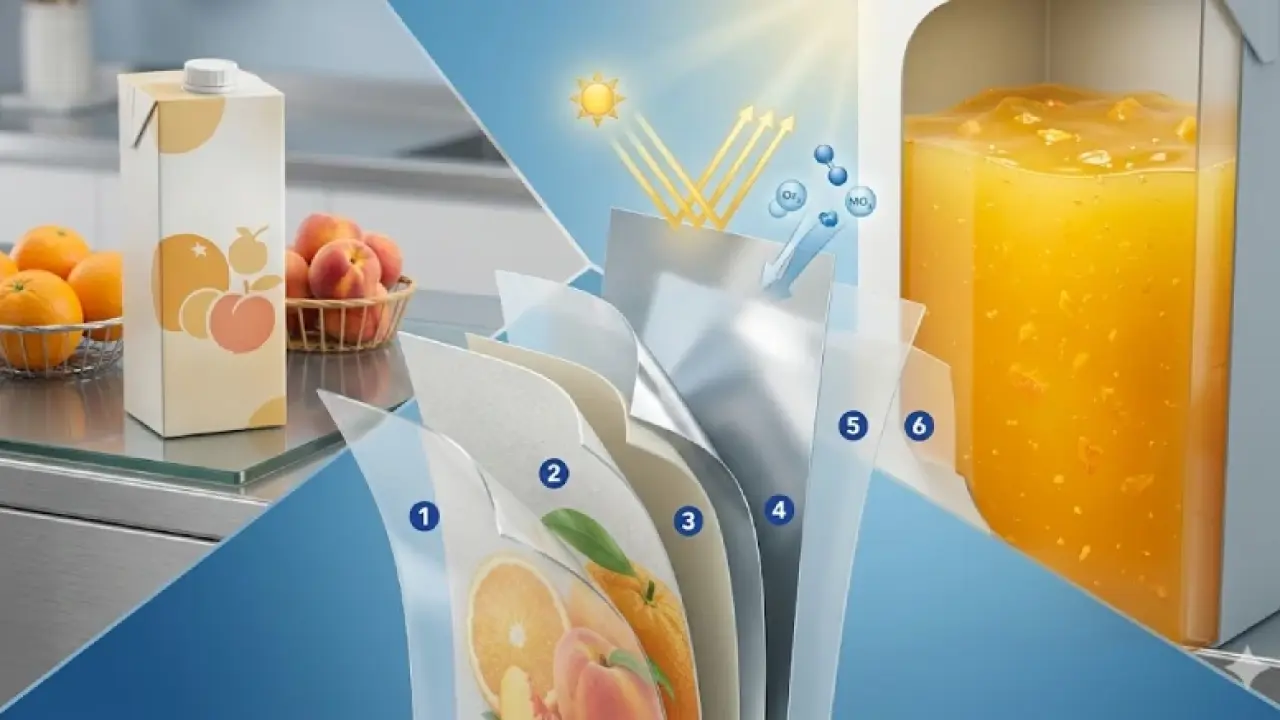
The six-layer structure of Tetra Pak packaging is an engineering achievement composed of paperboard, polyethylene, and aluminum. Each layer serves a specific function:
- Polyethylene (3 layers): Prevents moisture penetration and bonds the layers together
- Paperboard (1 layer): Provides structural strength and shape
- Aluminum foil (1 layer): Acts as a critical barrier against light and oxygen
Why Is the Aluminum Layer Critical for Vitamin C Preservation?
The aluminum layer creates a complete barrier against light. Vitamin C and many antioxidants are highly sensitive to light exposure and degrade rapidly when exposed to photons. Even though this layer is extremely thin (micron-level), it effectively keeps the product in total darkness, preserving its nutritional value as it was at the time of production.
This protection also indirectly helps maintain the juice’s Brix level and the integrity of its natural sugars.
How Does Aseptic Filling Work in the Beverage Industry?
Aseptic filling involves sterilizing packaging materials using hydrogen peroxide baths. The packaging is then formed, filled, and sealed inside a closed chamber under positive pressure to prevent the entry of external air.
The juice itself undergoes rapid pasteurization before filling and is transferred directly into the sterile package without exposure or temperature loss. This precise coordination between heat treatment and packaging is the key to ambient shelf stability.
The Role of UHT Systems in Product Safety
Ultra High Temperature (UHT) systems apply very high temperatures for a very short time (typically 2–5 seconds) to eliminate all microorganisms, including heat-resistant spores.
When synchronized with aseptic filling systems, the final product achieves commercial sterility, meaning no biological activity can occur داخل the package.
Oxidation Comparison: Tetra Pak vs. Transparent Bottles
In a controlled study, two identical preservative-free orange juice samples were stored for 60 days under sunlight at 25°C:
- Transparent PET bottle:
After 15 days, the juice darkened due to oxidation, vitamin C decreased by about 50%, and the taste became sour. - Tetra Pak packaging:
After 60 days, the color remained stable, over 90% of vitamin C was preserved, and the taste remained unchanged.
Environmental and Logistical Advantages
One of the main advantages of Tetra Pak packaging is its lightweight, rectangular shape, which optimizes space during transportation and reduces fuel consumption. Approximately 75% of the package is made from renewable paper-based materials.
Eliminating the cold chain (refrigeration during storage and transport) significantly reduces energy consumption, making it environmentally efficient—especially for long-distance distribution.
How Does Tetra Pak Compare to Other Packaging Methods?
Compared to glass and standard plastic bottles, Tetra Pak acts as an active protective shield:
- Glass blocks gases but allows light penetration
- Plastic bottles may allow gradual oxygen entry over time
- Tetra Pak simultaneously blocks light, oxygen, and microbes
This makes it ideal for sensitive products such as nectars containing suspended particles, preventing sedimentation and color changes.
Do Polyethylene Layers Leach Chemicals into the Beverage?
This is a common consumer concern. The polyethylene used in Tetra Pak is food-grade and highly stable against the natural acidity (low pH) of juice.
Unlike low-quality plastics, it does not degrade or release harmful substances such as BPA into the beverage. The lamination process uses physical bonding rather than chemical solvents, ensuring both chemical and microbiological safety.
Conclusion
Choosing Tetra Pak packaging is one of the most effective ways to preserve the natural properties of fruit in their purest form. By creating a completely sealed barrier, this technology eliminates the need for preservatives while maintaining authentic taste and nutritional value.
Through advanced multilayer engineering, Tetra Pak demonstrates that it is possible to extend shelf life without compromising the natural integrity of the product.
FAQ: Tetra Pak Packaging and Shelf Life
Why doesn’t Tetra Pak juice spoil out of the refrigerator?
Because it is sterile and completely protected from air and light, preventing microbial growth.
Is the aluminum layer harmful?
No. It is fully covered by polyethylene layers and never comes into direct contact with the juice.
What is the difference between Tetra Pak and metal cans?
Tetra Pak is lighter, has a lower carbon footprint, and does not impart a metallic taste.
How long can juice be consumed after opening?
Once opened, it must be refrigerated and consumed within 3–4 days.
Are preservatives added?
No. Aseptic technology eliminates the need for chemical preservatives.
Why do some packages swell?
Swelling indicates contamination or sterilization failure, leading to gas production. Such products should not be consumed.
Is Tetra Pak recyclable?
Yes. Layers are separated industrially: paper is recycled, and poly-aluminum materials are reused in construction products.
Why does juice taste better in Tetra Pak than plastic bottles?
Because the aluminum layer prevents oxidation and light-induced flavor changes.
Does sunlight penetrate Tetra Pak packaging?
No. The aluminum layer completely blocks visible and UV light.
Why are Tetra Pak products sometimes more expensive?
Due to advanced manufacturing technology and the cost of multilayer protective materials.