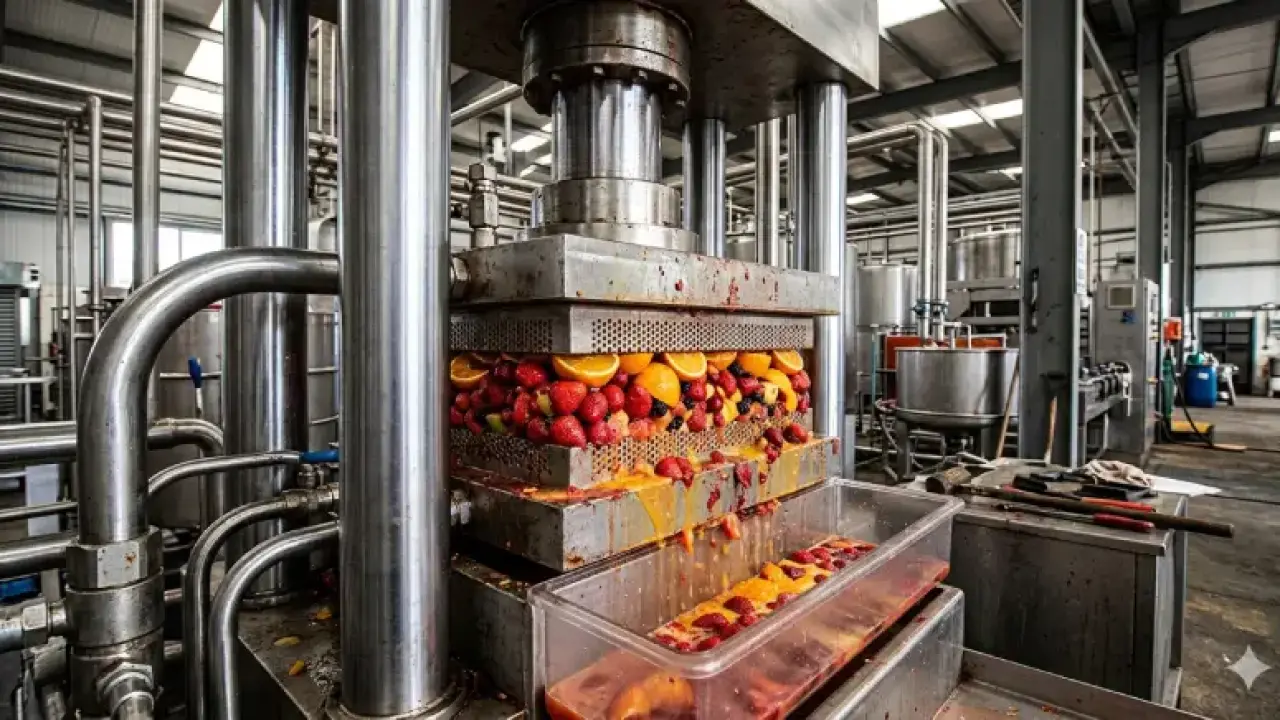
Cold-pressed juice is produced using extremely high hydraulic pressure to extract juice from fruits and vegetables, without relying on sharp blades or elevated temperatures. By eliminating friction and heat, this method minimizes rapid oxidation and prevents enzyme degradation. As a result, the final product retains higher levels of vitamins and minerals, along with a more authentic and natural flavor profile compared to conventional centrifugal extraction methods.
The adoption of this technology in the beverage industry responds to the growing demand for “living nutrition.” While conventional high-speed methods rupture plant cells and expose them to oxygen, cold pressing gently compresses raw material, preserving the structural integrity of micronutrients. This article provides a scientific and technical breakdown of this superior extraction process.
What Is Cold-Pressed Juice Technology and How Does It Differ from Centrifugal Extraction?
Cold-pressed juice production consists of two primary stages: crushing the fruit into pulp (without generating heat) followed by applying several tons of pressure of a hydraulic press. In contrast, centrifugal juicers rely on high-speed rotating metal blades. This rapid motion generates friction and heat, which can immediately degrade heat-sensitive vitamins.
A key physical difference is that centrifugal extraction introduces air into the liquid, accelerating oxidation and foam formation. Cold pressing, however, occurs in a low-turbulence environment with minimal air incorporation, resulting in greater product’s stability and quality.
The Role of Hydraulic Pressure in Preventing Oxidation
Hydraulic pressure enables gradual breakdown of fruit cell walls, releasing juice without introducing oxygen into the matrix. This significantly minimizes oxidation—the reaction between nutrients and oxygen. Consequently, cold-pressed juices maintain their vibrant, natural color and extend the stability of nutrients within the bottle.
Why Is Enzyme Preservation a Competitive Advantage?
Enzymes are biological catalysts essential for digestion and metabolic processes. In conventional thermal methods such as traditional pasteurization, many enzymes denature at temperatures above 45°C and lose functionality. Cold-press technology maintains temperatures at or below ambient levels, preserving these “active enzymes.”
The presence of intact enzymes reduces the metabolic burden of digestion and enhances the absorption rate of phytonutrients. This characteristic positions cold-pressed juices as an optimal choice for detox regimens and immune system support.
Impact of Zero Thermal Friction on Vitamin Stability
Heat-sensitive vitamins, particularly vitamin C and B-complex vitamins, are highly susceptible to degradation under elevated temperatures and light exposure. In conventional juicing systems, blade’s temperature—even slight increases—can reduce antioxidant potential.
Cold-pressed systems, by eliminating high-speed movement, prevent thermal degradation almost entirely. The resulting product is biologically closer to raw fruit, with enhanced bioavailability—meaning a greater proportion of nutrients is absorbed into the bloodstream.
How HPP Technology Enhances Shelf Life in Cold-Pressed Juices
Since cold-pressed juice production does not involve heat, its natural shelf life is relatively short (approximately 3–5 days). To address this limitation, leading manufacturers employ High Pressure Processing (HPP).
In this method, sealed bottles are subjected to pressures equivalent to deep ocean conditions, effectively inactivating harmful bacteria without heat. This extends shelf life to 30–60 days while preserving flavor, nutrients, and enzymatic activity.
Comparative Stability: Layer Separation and Color Changes
In a controlled experiment, two apple juice samples were prepared:
- Sample A: Centrifugal extraction
- Sample B: Cold-pressed extraction
Both were stored at room temperature.
Observations:
- Sample A (Centrifugal): Within 15 minutes, phase separation occurred, and the top layer darkened due to rapid oxidation.
- Sample B (Cold-Pressed): After 120 minutes, the juice remained homogeneous with a bright yellow color and no visible foam or separation.
This demonstrates that cold-pressed juice exhibits significantly higher physical and chemical stability due to minimal air exposure and preservation of natural pectin structures.
Economic and Quality Advantages for Consumers
Although cold-pressed juices are priced higher, they offer superior nutritional yield. Cold-press systems can extract up to 30% more juice from the same quantity of raw material—especially leafy greens like kale and spinach—resulting in less waste and higher nutrient density per serving.
From a quality standpoint, consumers receive more vitamins and minerals in smaller volumes compared to conventional juices. Over time, this may reduce reliance on dietary supplements and support overall health.
Why Are Viscosity and Mouthfeel Superior in Cold-Pressed Juice?
The viscosity of cold-pressed juice is attributed to suspended micro-particles that pass gently through press filters. These particles contain soluble fibers and flavonoids typically lost in aggressive filtration or centrifugal methods.
The resulting “full-bodied” mouthfeel is directly linked to this structural integrity. Additionally, these suspended particles slow the absorption of natural sugars (fructose), moderating digestion and glycemic response.
How to Identify Authentic Cold-Pressed Juice
Identifying genuine cold-pressed juice is possible through labeling and visual characteristics. Firstly, these products are typically stored in dedicated refrigeration units (cold chain) and have a shorter shelf life. Secondly, the packaging includes the term “Cold Pressed” and, if pressure has been used for preservation, the label “HPP.”
From a visual standpoint, these juices should not be completely transparent or resemble diluted liquids; the presence of a small amount of natural sediment at the bottom of the bottle— which becomes uniform when shaken—indicates the integrity and authenticity of the cold-press process. Additionally, their taste should exactly match that of the raw fruit itself, without any cooked aftertaste or artificial sweetness. For a more detailed evaluation of sugars, you can refer to the review of natural and artificial sweeteners in beverages.
Conclusion
Cold-pressed juice technology is not a passing trend, but a refined return to extracting nutrients in their purest form. By eliminating heat and oxygen exposure, this method establishes a new benchmark in beverage quality—maximizing health benefits, flavor integrity, and product stability.
Although production is more complex and costly, investing in cold-pressed beverages is ultimately an investment in maximizing the nutritional vitality derived from fruits and vegetables.
FAQ – Frequently Asked Questions About Cold-Pressed Juice
- Is cold-pressed juice the same as regular natural juice?
No. The difference lies in the extraction method—cold pressing avoids heat and blades, preserving significantly more nutrients. - Why is cold-pressed juice more expensive?
Due to costly hydraulic equipment, slower production rates, and higher raw material requirements. - What is its shelf life?
30–60 days with HPP processing; otherwise, 3–5 days under refrigeration. - Can cold-pressed juice be made at home?
Yes, using slow juicers (low RPM), which approximate similar quality. - Is it suitable for diabetics?
Due to retained soluble fiber, sugar absorption is slower than conventional juice, but consumption should still be monitored. - What is HPP technology?
A non-thermal preservation method using extremely high water pressure to eliminate bacteria. - Does cold-pressed juice taste different?
Yes, it is fresher, more vibrant, and closely resembles raw fruit. - Why doesn’t it foam?
Because air is not rapidly incorporated during extraction. - When is the best time to consume it?
Preferably in the morning or on an empty stomach for optimal enzyme absorption. - Can the leftover pulp be used?
Yes, it remains high-quality and can be utilized in baking or dietary recipes.